EV Charger Installation
Home EV Charger.
Installed This Week.
SEAI Grant Handled.
Up to €300 off via SEAI. We handle the paperwork. Safe Electric certified install.
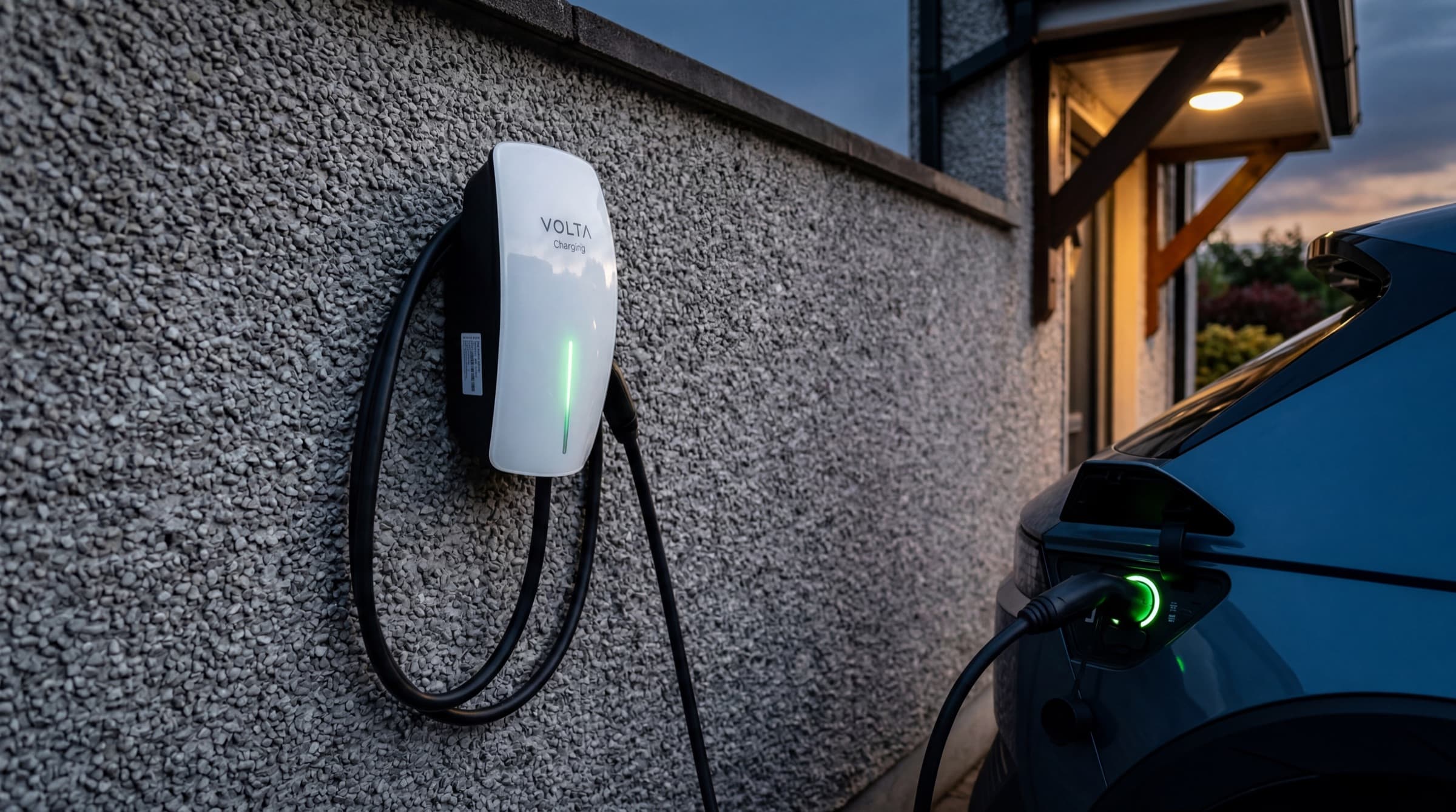
EV charger installed and certified. SEAI grant paperwork handled.
The Package
What’s Included
Site survey and load assessment
Supply, installation, and commissioning of your chosen charger
All major brands supported, with a recommendation on the best fit for your setup
Consumer unit upgrade if required
SEAI grant paperwork and application assistance
Full Safe Electric certification and warranty documentation
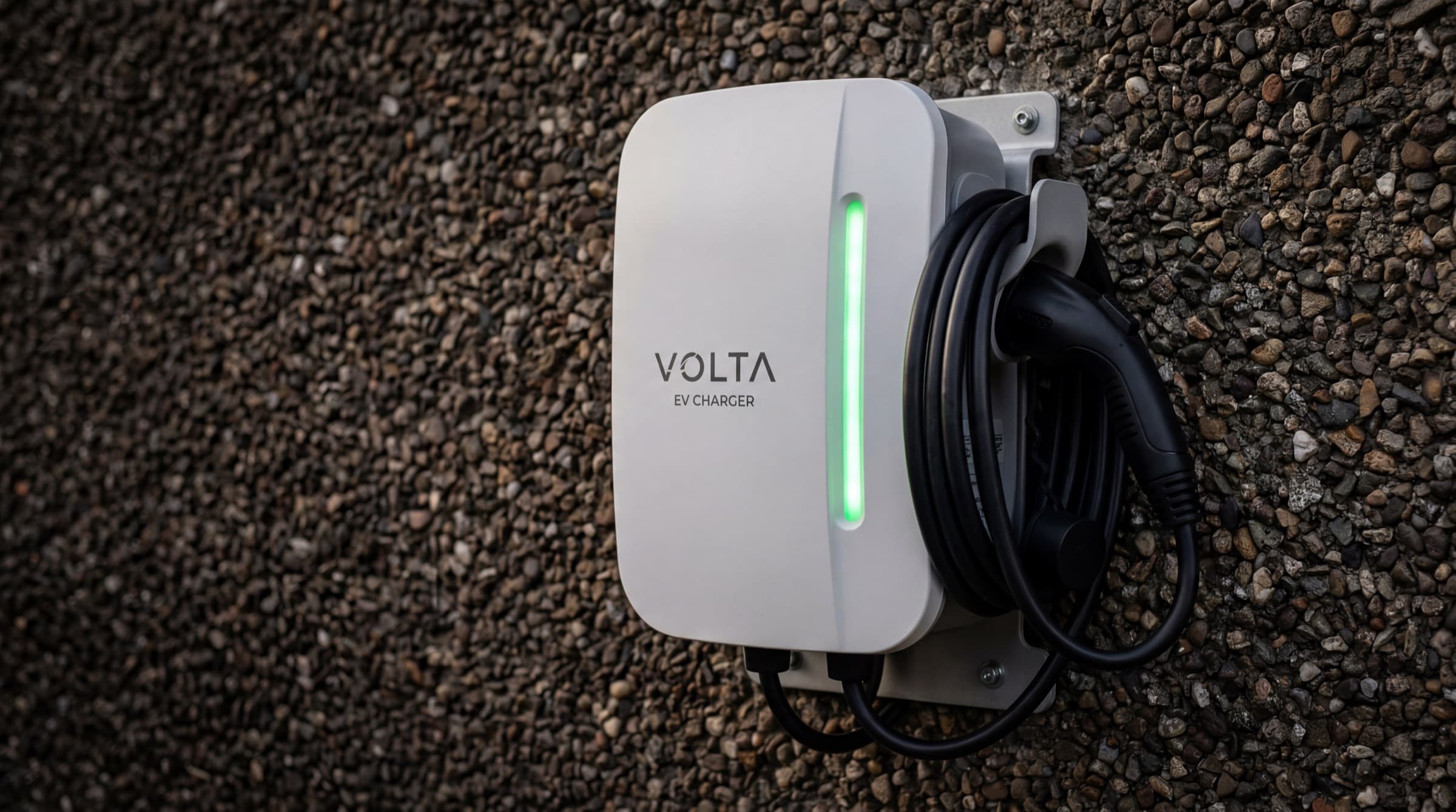
Tethered, Untethered, Smart, App-Connected. We Fit Them All.
Zappi, Hypervolt, EO, Wallbox, Tesla Wall Connector, Easee and Andersen: every major brand. Dedicated 32A circuit run from the consumer unit, RCBO protection, earth-leakage compliance, smart-meter integration where supported. SEAI grant paperwork submitted on your behalf so the €300 lands back in your account within weeks.
Why Us
Why EV Owners in Wexford and Dublin Choose J Cowman
SEAI Grant Sorted
We handle the grant application process so you get the maximum rebate without the paperwork headaches. Straightforward from survey to sign-off.
Installed by a Safe Electric-Certified Crew
Every charger is installed by our Safe Electric registered team. It is the same crew that handles full residential fit-outs rather than a subcontracted installer.
Capacity for a Second Car or Solar Integration, Installed Once
We assess your current electrical capacity and install with room to grow, whether you add a second vehicle or integrate solar down the line.
Plan Your Install
Know the cost before we visit
The SEAI Home Charger Grant takes €300 off the cost of a domestic charger. It is open to owner-occupiers and to most landlords with a tenanted property, and you can claim it once per parking space. We submit the application on your behalf once the install is signed off.
Tethered chargers have the cable permanently attached, so they are quick to plug in with no cable to carry, but you are stuck with one connector type. Untethered chargers have just a socket on the wall, so you bring your own cable and can swap it if you change car. Most Irish drivers pick tethered for a single-car driveway and untethered for shared or rental setups.
Work out your EV charger cost in 60 seconds
Tell us your car, your driveway and your fuse board, and we’ll show your install price net of the SEAI €300 grant.
Workplace & Multi-Bay
Charging more than one car is a different design problem
A home charger is a single dedicated circuit. A workplace car park, a fleet yard or an apartment block is a capacity question first and a charger question second, and getting that order wrong is how people end up paying for a supply upgrade they did not budget for.
Single-phase or three-phase decides your ceiling
A domestic supply is single-phase and tops out around 7.4 kW per charge point. A three-phase supply carries up to 22 kW AC on the same footprint, roughly three times the delivery for the same number of cables. Most commercial premises already have three-phase and do not realise the headroom is there; some do not, and that is a supply upgrade with its own lead time. Establishing which you have is the first question, not a detail for later.
Load management usually beats a supply upgrade
Eight bays at 7.4 kW is 59 kW if every car charges flat out at once, which they never do. Dynamic load management shares the available capacity across the bays and throttles back when the building's other loads peak, so a car park that would nominally need a supply upgrade often does not. On a workplace where cars sit for eight hours, slower shared charging is not a compromise at all. It is the difference between a manageable install and a five-figure network job.
Fleet and overnight yards are a different profile again
A van fleet returning at six in the evening and leaving at seven in the morning has thirteen hours of dwell time and a hard deadline. That is a scheduling problem rather than a power problem, and it is usually solved with sequenced charging across the yard rather than by sizing every bay for simultaneous full output. Metering matters here too, because fuel becomes an electricity cost that has to be attributed.
Apartment blocks have their own grant, and it is substantial
The SEAI Apartment Charging Grant is funded by Zero Emission Vehicles Ireland and covers up to 80% of infrastructure costs (cabling, containment, labour and construction) plus €600 per charge point installed. It is open to owners' management companies, housing bodies, local authorities and both commercial and private landlords, and it is designed for bulk installation at a single location rather than one-off chargers. The charging-network element applies to developments commenced before 10 March 2021, because schemes after that date were required to provide the infrastructure themselves. Support for workplace and destination charging sits with ZEVI and local authority schemes and changes more often, so we check what is current when we quote rather than publishing a figure that may be out of date.
Commercial EV sits alongside the rest of the electrical package on our commercial page, and EV provision for a development is designed in at first fix rather than retrofitted. See multi-unit residential.
Who You’re Dealing With
Why this job is safe with us
J Cowman Electrical Contractors has been Safe Electric registered since 2021, with 5 years of certified installations behind every job we quote.
Safe Electric registered
Registration A6700
Verifiable on the public register
Public liability insurance
Up to €6.5M
Cover in place on every job
Crew size
10 electricians
Trading since 2021
Fixed-price quote
Within 48 hours
WhatsApp replies within the hour, Mon–Fri
Read First
Four questions worth answering before you order a charger
Each of these has its own guide. Between them they cover almost every reason an EV install costs more than the quote someone saw online.
Workplace, fleet or apartment block?
Send us the number of bays you want, where the incoming supply is, and a photo of the main board. Capacity is the answer that decides everything else, and we can usually tell you on the first call whether you are looking at load management or a supply upgrade.
FAQ
EV Charger Installation: Common Questions
Am I eligible for the SEAI home charger grant?
The €300 SEAI home charger grant applies to most owner-occupied homes, and to many landlords with a tenanted property, where no previous charger grant has been claimed for that parking space. We submit the application on your behalf once the install is signed off.
Which charger brands do you install?
Zappi, Hypervolt, Easee, Ohme, EO, Wallbox, Tesla Wall Connector and Andersen among others, and we match the brand to your setup rather than to whatever we have in the van. Solar pairing, smart scheduling and load balancing are the three features worth deciding on before you pick.
Do I need a consumer unit upgrade?
Sometimes, and it is the most common reason an EV install costs more than the headline price. A charger needs its own RCBO-protected circuit, and an older board may not have a spare way, may lack the right protection, or may not have the main switch rating for the additional load. We check before quoting rather than after starting. Our guide on fuse board upgrades for EV chargers covers what to look for yourself.
How long does installation take?
Most domestic chargers go in inside a half-day to a day including testing and the paperwork, once the cable route is agreed. Where a board change is needed as well, allow a full day. Multi-bay commercial and apartment installations are quoted after a site visit because the capacity assessment drives everything else.
Can you install chargers at a workplace or apartment block?
Yes. Those are capacity projects rather than charger projects: the first job is establishing what the incoming supply can carry and whether dynamic load management lets you avoid a supply upgrade. For apartments and multi-unit developments the SEAI Apartment Charging Grant covers up to 80% of infrastructure costs plus €600 per charge point, which changes the economics considerably for an owners' management company.
What is the difference between 7 kW and 22 kW charging?
The supply. A single-phase domestic supply tops out around 7.4 kW per point; a three-phase supply can deliver up to 22 kW AC. Most commercial premises already have three-phase and often have more headroom than they realise. For a workplace where cars sit all day, though, faster is rarely the right answer. Sharing the available capacity across more bays usually delivers more useful charging than fewer, faster points.
From a Single Rewire to Full Developments: Send Us the Details.
Send us your plans or a quick description. We return a fixed-price quote within 48 hours, no obligation, no sales calls.